
Few artists have transformed the landscape of kinetic sculpture as profoundly as Anthony Howe. Known globally for his mesmerizing, wind-powered installations, Howe creates monumental works that seem to exist somewhere between art, physics, and dream. His kinetic sculptures move with an uncanny grace; large, metallic forms that spin, fold, and unfurl in perfect balance with the elements.
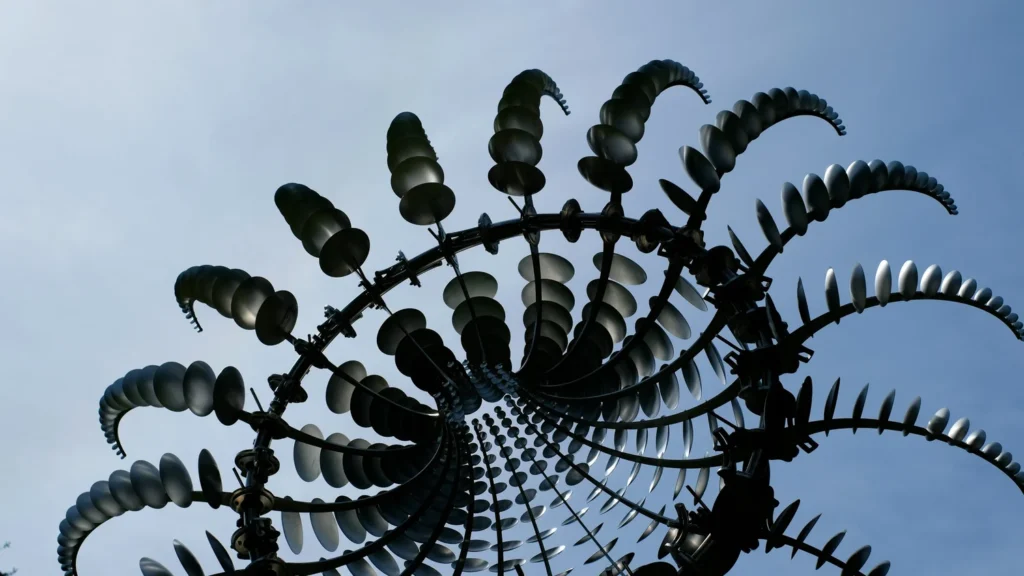
Based in Washington State, USA, Howe has spent decades refining his vision: turning cold sheets of stainless steel and aluminum into living, breathing works of art. His process is deeply technical, relying on digital modeling, precise fabrication, and meticulous balance testing. Yet, beyond the engineering lies something poetic; a fascination with the natural world and the unseen forces that shape it. Each sculpture interacts with the air as though it has consciousness, responding to the gentlest movement of wind with hypnotic rhythm.
Howe’s work has captivated audiences worldwide, from collectors and museums to public art installations that define entire landscapes. Perhaps most famously, he designed the Olympic Cauldron for the 2016 Rio Games, a shimmering kinetic centerpiece that embodied the unity of energy and motion. It was a moment that brought kinetic art to the global stage; proving that sculpture could be both monumental and meditative.
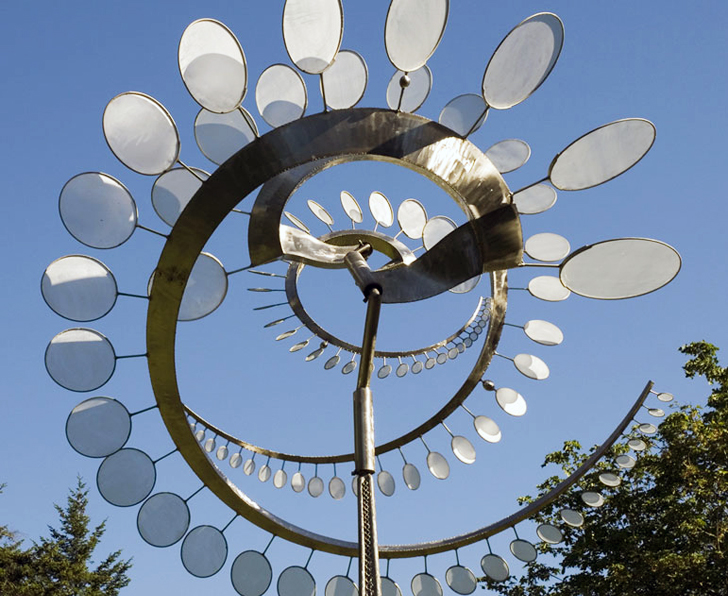
While Howe’s designs are undeniably futuristic, they also connect deeply to nature’s cycles. His sculptures remind us that motion itself is timeless; a language shared by wind, waves, and the turning of planets. In a world often dominated by the digital, Anthony Howe’s art stands as a physical, elegant reminder of what happens when creativity and natural forces move as one.
Growing up in admiration of Howe’s work, Carr’s kinetic wind sculptures share Howe’s respect for engineering and equilibrium. However, Carr leans toward a minimalist, modern aesthetic; where sleek lines and reflective surfaces meet the softness of wind and light. Both artists invite the viewer to pause and observe the subtle forces that shape our surroundings, transforming sculpture from a static object into an ever-changing experience.