
Organic sculpture design draws directly from the natural world; its curves, rhythms, imperfections, and quiet intelligence.
Rather than imposing rigid geometry, organic sculptors allow form to evolve, echoing growth, erosion, balance, and movement found in nature. This approach results in works that feel intuitive, timeless, and deeply connected to their surroundings. Across history and into contemporary practice, many artists have explored organic sculpture in different ways, using natural materials, fluid forms, and an emphasis on harmony rather than dominance.
Constantin Brâncuși: Essence Over Detail
Constantin Brâncuși is often considered a pioneer of organic modernism. His sculptures strip subjects down to their most essential forms, removing unnecessary detail to reveal an inner truth. Works such as Bird in Space demonstrate how a simple, flowing shape can suggest motion, life, and spirit without literal representation. Brâncuși’s smooth surfaces and refined contours reflect natural processes like polishing by wind or water. His work established a foundation for organic sculpture by showing that abstraction could still feel deeply human and natural.

Barbara Hepworth: Landscape and the Human Form
Barbara Hepworth’s sculptures are closely tied to the landscape, particularly the coastal and rural environments in which she lived and worked. Her forms often resemble stones shaped by erosion, shells, or bones, punctured with voids that invite light and space into the work. Hepworth explored the relationship between interior and exterior, mass and emptiness. By carving directly into stone and wood, she allowed the material itself to guide the final form. Her work feels grounded, meditative, and inseparable from the natural world that inspired it.

Isamu Noguchi: Sculpture as Living Space
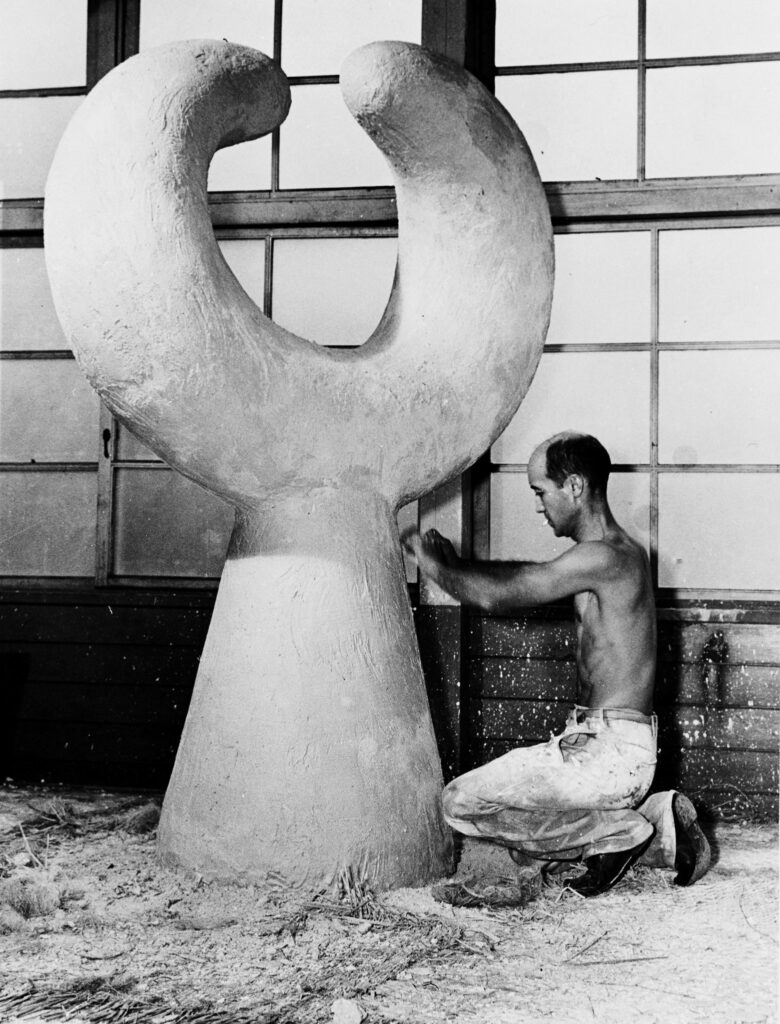
Isamu Noguchi blurred the boundaries between sculpture, design, and landscape. His organic forms often appear simple at first glance, yet reveal great sensitivity to balance, texture, and proportion. Influenced by both Eastern and Western traditions, Noguchi treated sculpture as something to be experienced physically and emotionally. Using stone, wood, and metal, Noguchi embraced natural irregularities and imperfections. Many of his works feel as though they belong outdoors, shaped by the same forces as the landscapes around them. His approach expanded organic sculpture beyond objects into environments.
Will Carr: Movement and Natural Rhythm
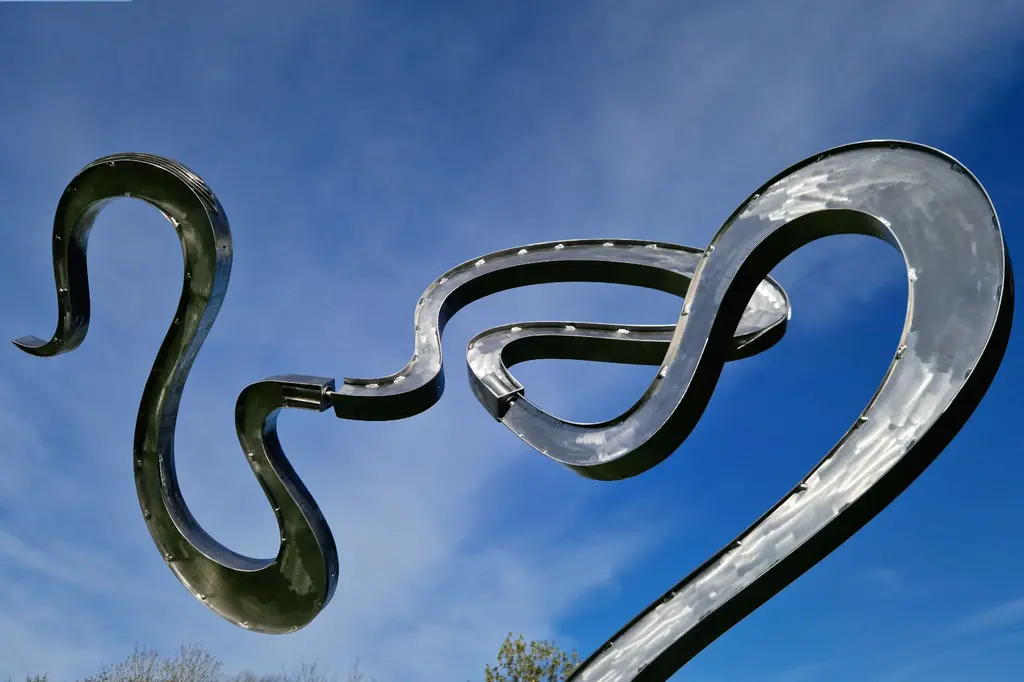
Contemporary sculptor Will Carr brings organic design into motion through kinetic sculpture. His work often draws inspiration from natural phenomena such as wind, water, and growth patterns, resulting in sculptures that feel alive and responsive. Carr’s forms are fluid and balanced, designed to move gently rather than dominate their surroundings. By allowing the natural force of the wind to animate his sculptures, he creates a dialogue between artwork and environment. This dynamic approach reflects an organic philosophy not just in form, but in behaviour. His sculptures demonstrate how organic design continues to evolve, embracing movement and interaction while remaining rooted in natural principles.
The Enduring Appeal of Organic Sculpture
Organic sculpture design resonates because it mirrors the world we inhabit. Its curves feel familiar, its balance instinctive, and its materials honest. Whether static or kinetic, organic sculptures invite slower looking and deeper connection. From Brâncuși’s distilled forms to Will Carr’s wind-driven movement, organic sculpture continues to remind us that some of the most compelling designs emerge not from control, but from observation, respect, and collaboration with nature.